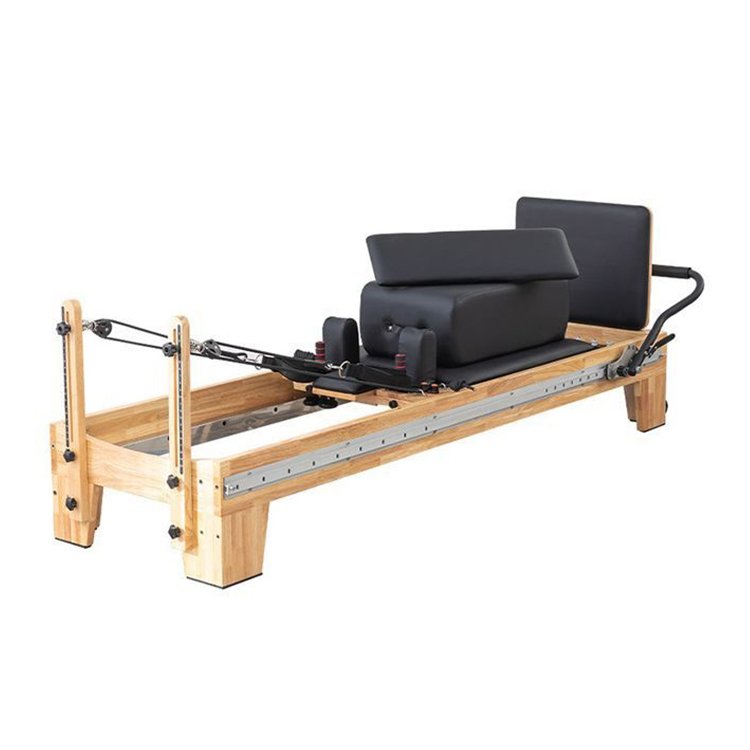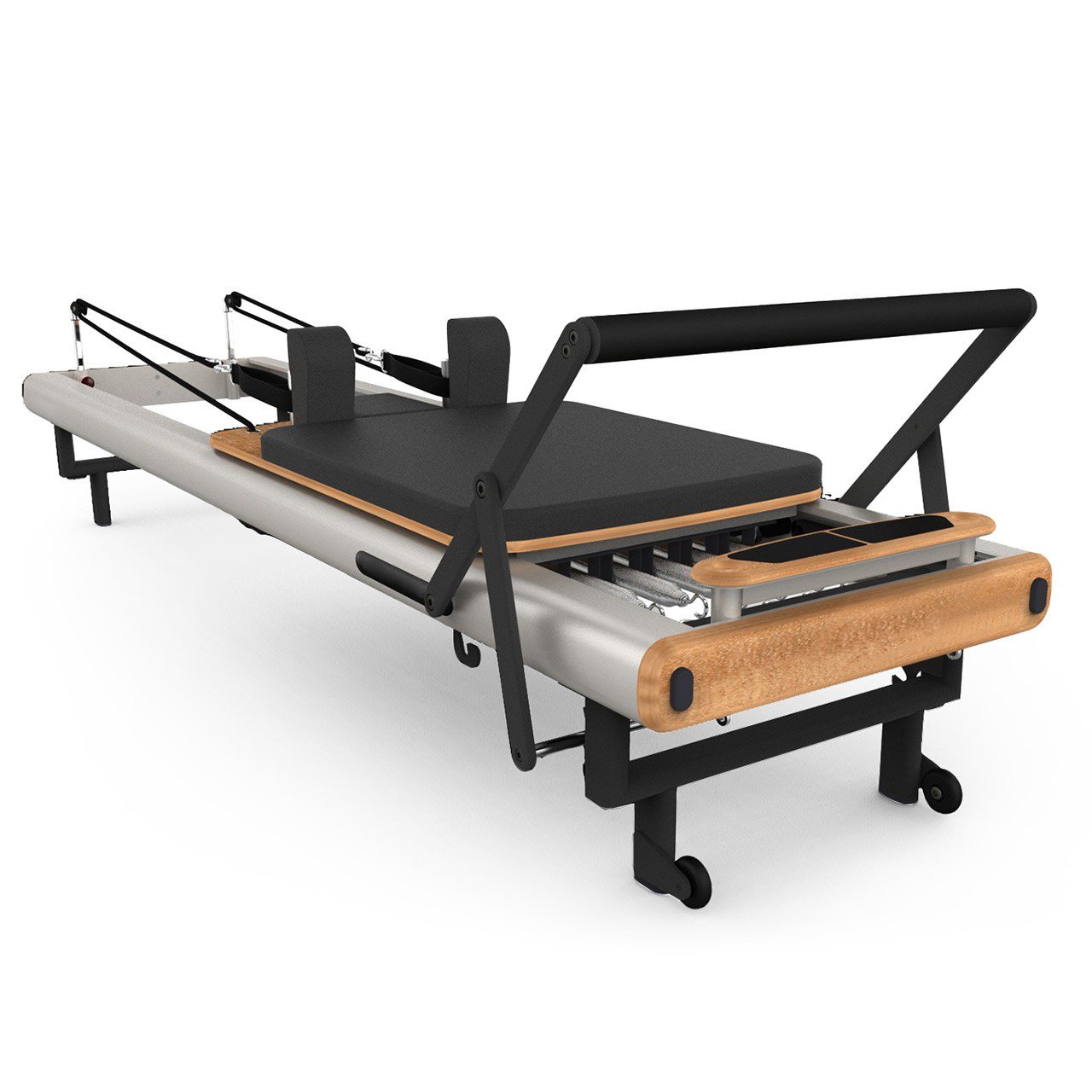
Among Pilates apparatus, few pieces of equipment are quite like the Cadillac—
It serves not only as a training tool but also as an “extension of the Method itself.”
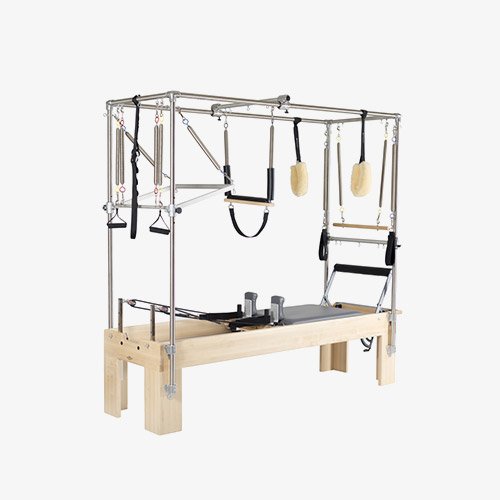
Many people, upon encountering the Cadillac for the first time, are captivated by its structure: its frame, springs, sliding bars…
Yet, what truly establishes it as a foundational piece of equipment is never its physical appearance, but rather the way it transforms how we control our bodies.
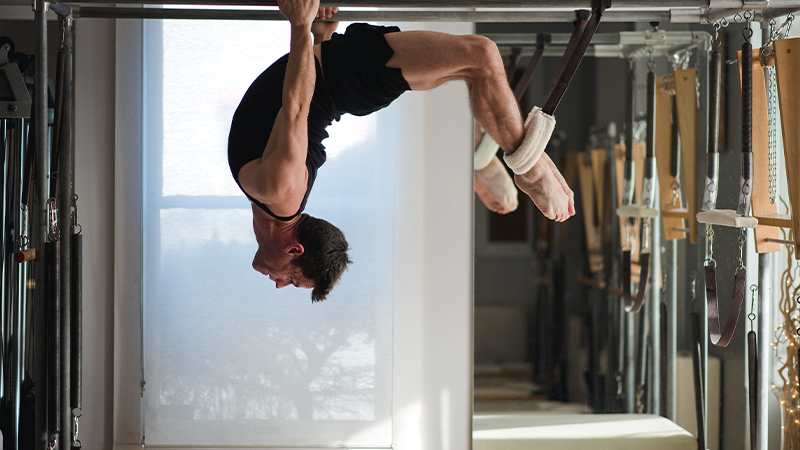
Not all training can be "precisely controlled."
In a study investigating Cadillac training, participants demonstrated significant improvements in both pain levels and functional capacity following six consecutive weeks of systematic training.
However, to view the pilates Cadillac merely as “effective” is to significantly underestimate its true potential.
Another study from the field of sports medicine takes this a step further, noting that:
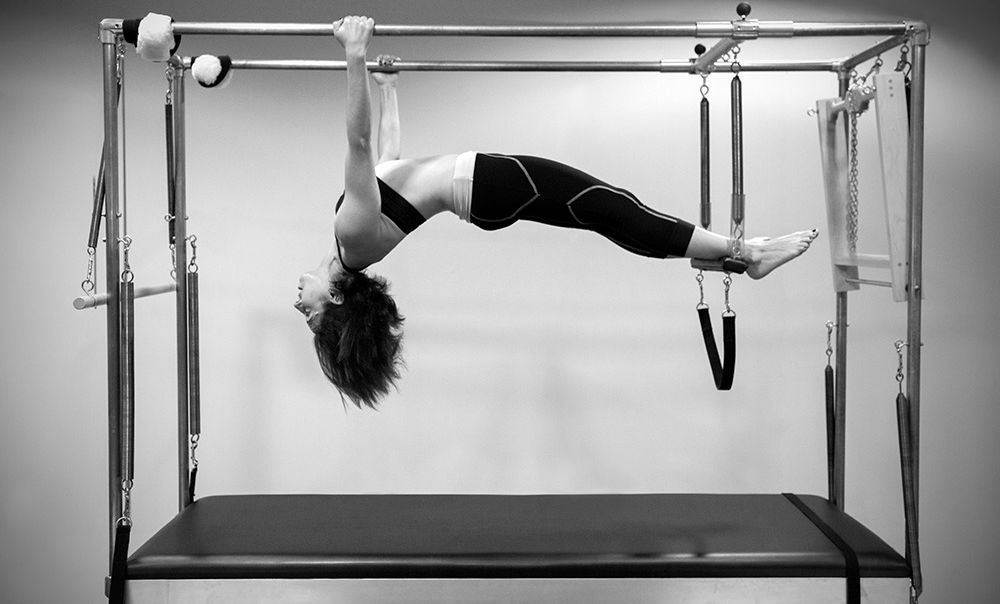
Performing movements in different directions on the Cadillac results in distinctly differentiated activation across various core muscle groups.
Simply put:
- Forward-reaching movements tend to activate the external obliques more readily;
- Chest expansion movements are more inclined to engage the back musculature.
What does this imply?
Pilates Cadillac training is not merely about “performing movements,” but rather about “precisely engaging the body.”
It transforms the focus of training from “which body part is being worked” to “how that body part is being activated.”
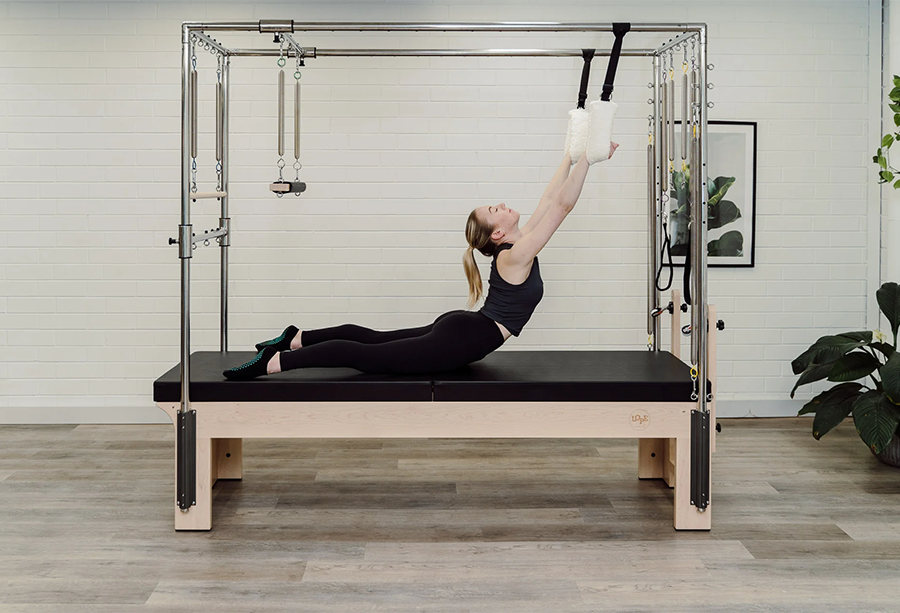
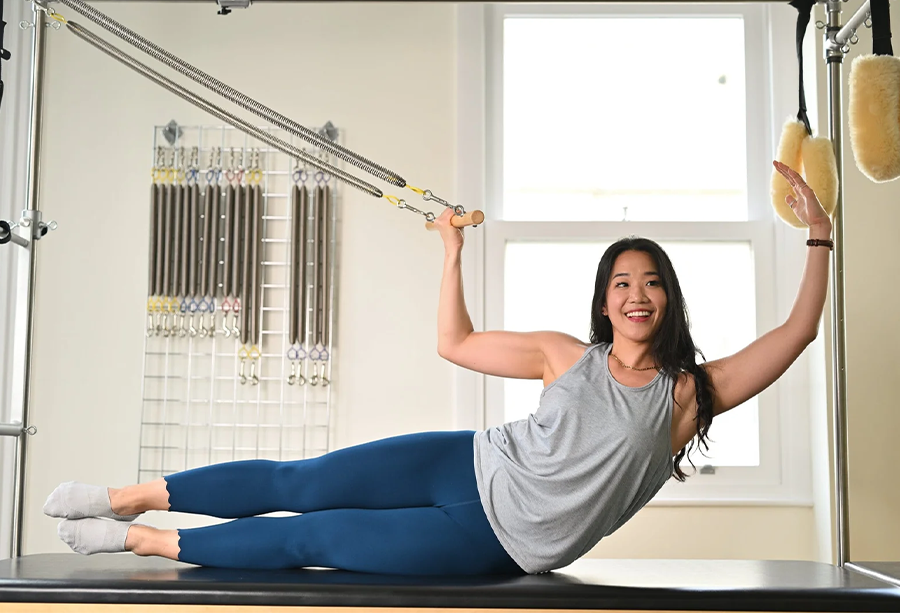
Why do so many professional spaces invariably choose the Cadillac?
Once you truly grasp this point, you will understand exactly why:
- Rehabilitation centers cannot function without it.
- High-end studios consider it an essential fixture.
- Seasoned instructors often regard it as their “core piece of equipment.”
This is because it provides a specific capability:
The ability to establish training pathways—adjustable, controllable, and reproducible—that cater to a diverse range of individuals.
Take this example:
- Beginners require safety and guidance.
- Those with sedentary lifestyles need core activation.
- Rehabilitation clients demand precise control.
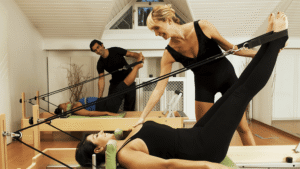
- Instructors need tools that facilitate effective teaching and demonstration.
The Cadillac meets all these needs simultaneously—something that standard exercise equipment struggles to achieve.
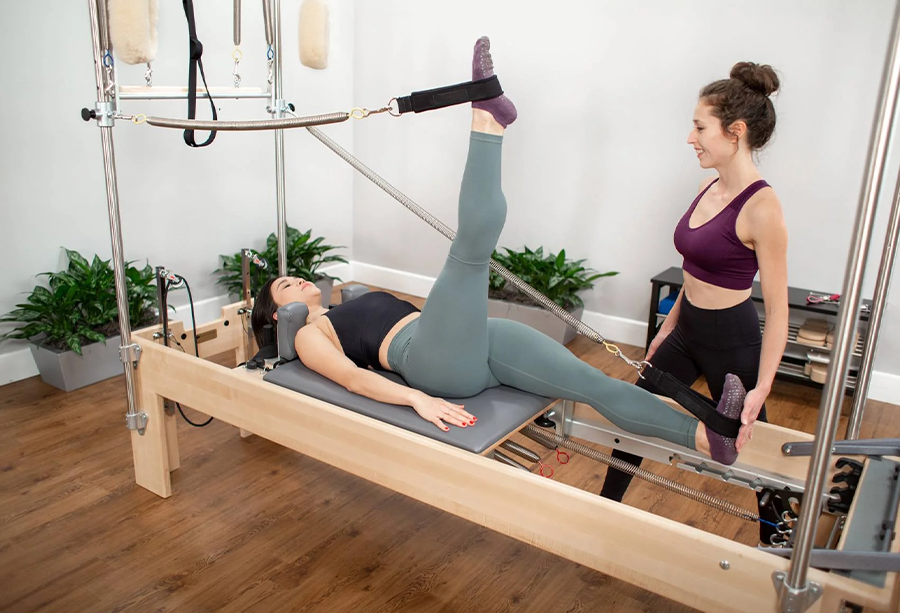
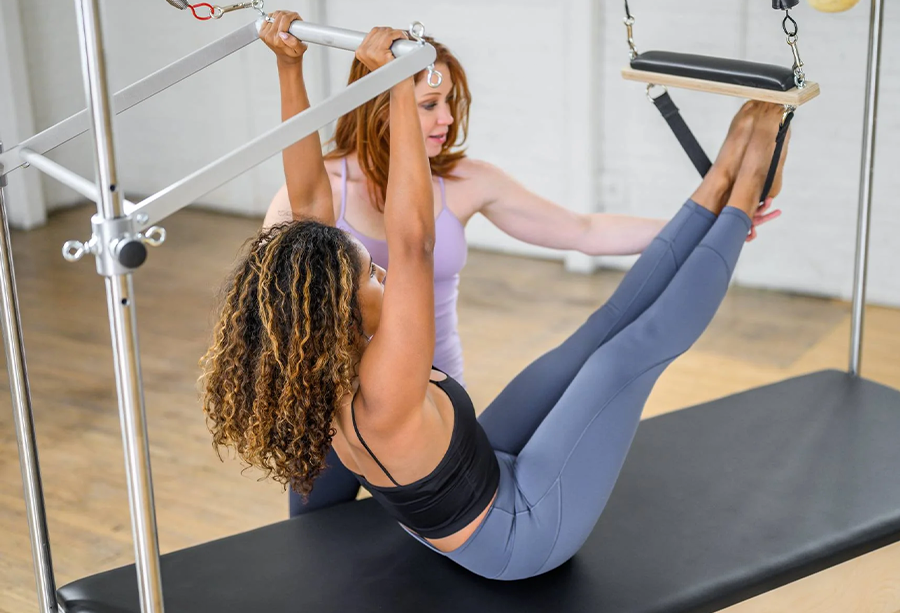
A Frequently Overlooked Issue When Choosing a Cadillac
When making a purchase, many clients tend to focus their attention primarily on price, aesthetics, and the quantity of accessories.
However, the factor that truly impacts the user experience is a more “structural” consideration—specifically, the alignment between the equipment’s spatial footprint and the intended method of use.
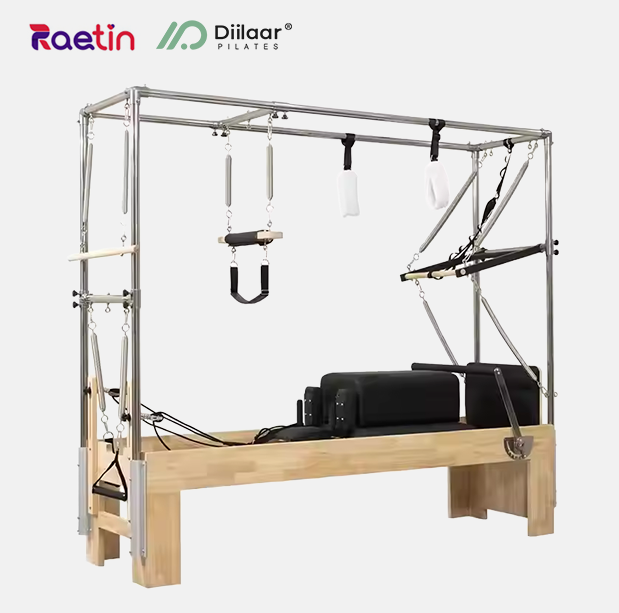
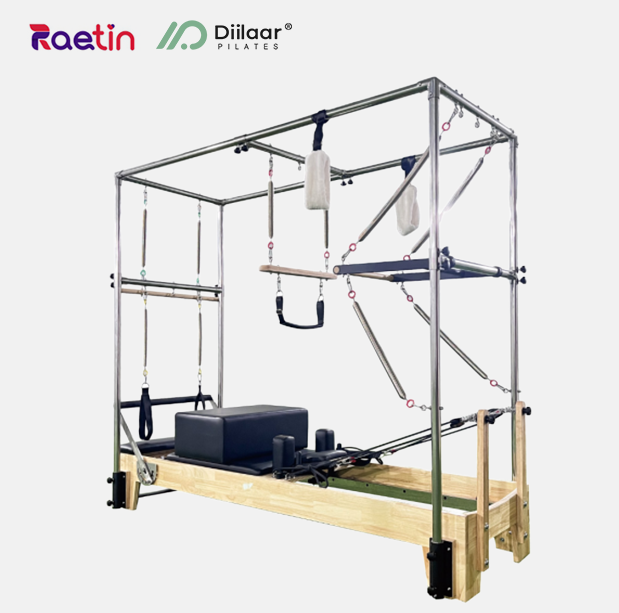
This is precisely where the distinction between “high-leg” and “low-leg” versions becomes truly significant:
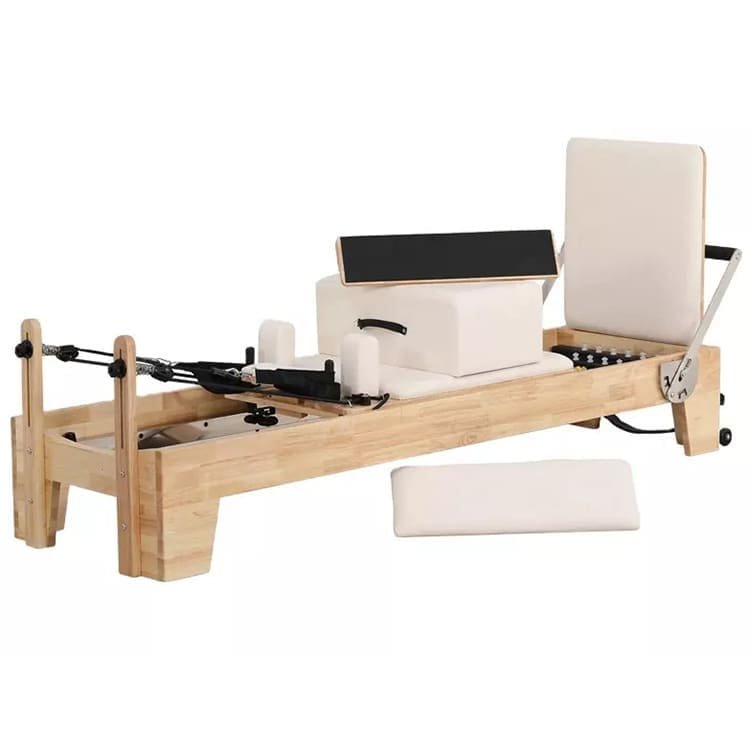
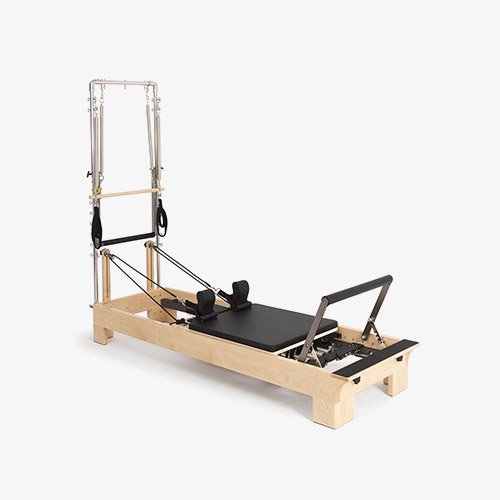
- High-Leg Version: Ideal for instructional settings, rehabilitation environments, and spaces requiring a full range of motion.
- Low-Leg Version: Best suited for boutique studios or high-end private training spaces, where the emphasis lies on maximizing spatial efficiency and visual harmony.
These are not merely “configuration differences,” but rather extensions tailored to specific usage scenarios.
If the choice is mismatched, even the finest pilates equipment will struggle to realize its full potential value in the long run.
How do we view a Cadillac?
I work in the manufacturing of Pilates equipment.
Over the years, we have served clients across North America, the Middle East, Europe, and Southeast Asia.
One thing has become increasingly clear:
What clients truly need is never merely a piece of equipment that *looks* professional, but rather a unit that offers long-term stability and genuinely supports the demands of instruction and training.
Consequently, we have consistently engaged in several practices that might appear “slow”:
- Controlling quality right from the raw material stage;
- Iteratively refining structural stability and resistance feedback;
- Ensuring that every production batch maintains consistent performance across diverse environments;
And ensuring that all our products meet certifications such as SGS, ISO, and CE—
Not merely to display certificates on a wall as “proof,” but to guarantee that our pilates equipment remains reliable across different countries and under varying intensities of use.
This unwavering commitment to stability is reflected in every Cadillac unit featured on diilaar.
We do not make a point of overtly emphasizing this; however, when you truly begin to compare different pieces of Pilates equipment, you will gradually come to recognize the difference.
The true value of the Cadillac has never lain in “how many movements it can perform.”
Rather, it lies in this:
Whether it can make every single movement more meaningful.
When a piece of pilates equipment has the power to shape the very way we train,
it ceases to be merely a machine.