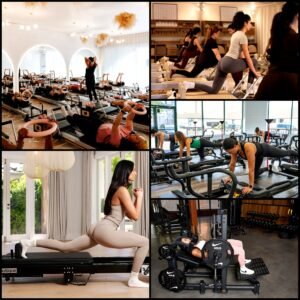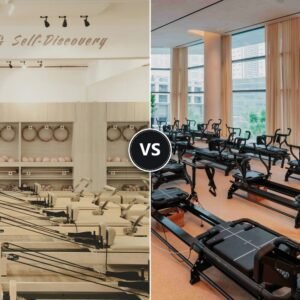
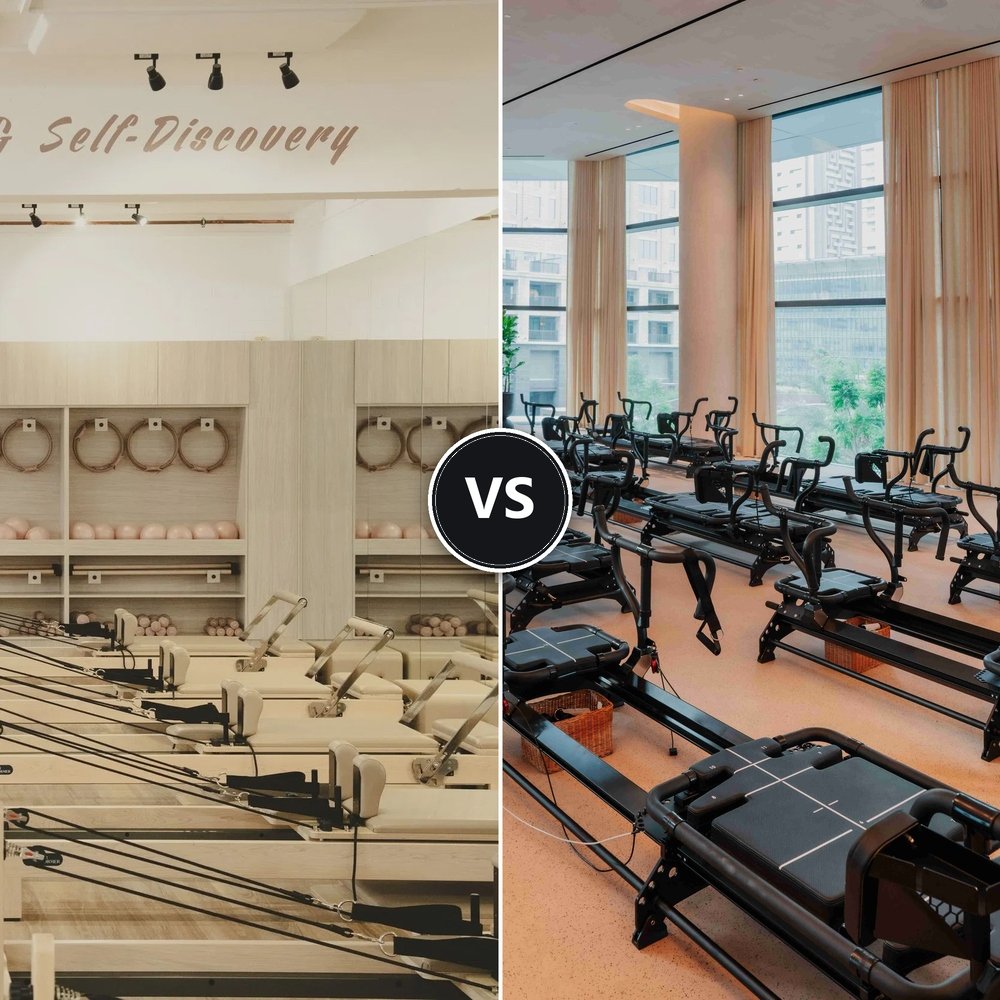
Megaformers and traditional Pilates Reformers may look similar, but they are designed for different training experiences.
Both use a moving carriage, springs, and adjustable resistance. However, they differ in exercise style, training intensity, and the needs of the studios that use them.
Understanding these differences can help studio owners choose the right pilates equipment for their business.
1. Megaformer vs. Pilates Reformer: Key Differences
| Feature | Megaformer | Traditional Pilates Reformer |
|---|---|---|
| Main Focus | High-intensity, low-impact training | Pilates-based strength, flexibility, and control |
| Training Style | Slow, continuous movements with sustained muscle engagement | Controlled movements with a focus on alignment and technique |
| Resistance | Multiple resistance settings and spring configurations | Spring-based adjustable resistance |
| Workout Experience | Physically demanding, full-body workouts | Versatile training for different fitness levels |
| Common Users | Boutique fitness studios and group training facilities | Pilates studios, fitness centers, and rehabilitation settings |
Although both machines provide resistance-based workouts, their training approaches are different. The best choice depends on your studio’s positioning and target clients.


2. Which Equipment Is Right for Your Studio?
Choose a Megaformer If:
- You want to offer high-intensity, low-impact group workouts.
- Your studio focuses on full-body strength and endurance training.
- You plan to build a boutique fitness concept around dynamic training sessions.
Choose a Traditional Pilates Reformer If:
- You offer classical or contemporary Pilates classes.
- Your clients include beginners, experienced practitioners, and different age groups.
- You need versatile equipment for private sessions and group classes.
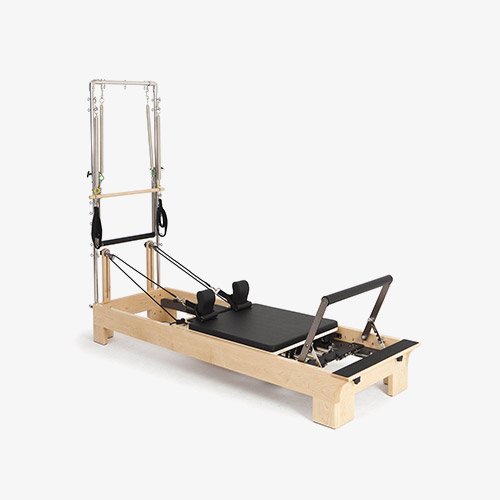
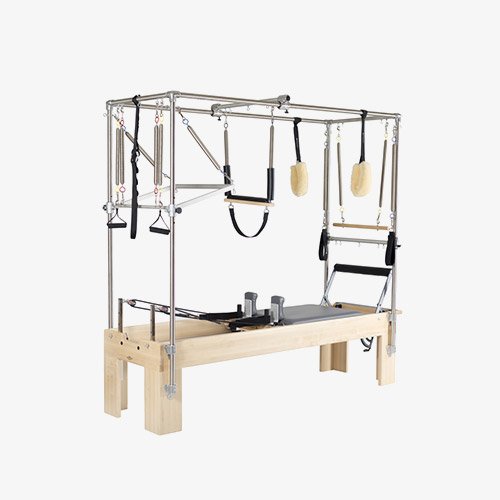
For studios focused on professional Pilates training, a traditional Reformer offers flexibility across a wide range of exercises and training programs.


3. What Should You Consider Before Buying?
Before investing in pilates equipment, consider these key factors:
Studio Positioning: Choose equipment that matches your training concept and target customers.
Space Planning: Consider equipment dimensions, instructor movement, and the space needed between machines.
Build Quality: Check the frame construction, spring performance, carriage movement, and upholstery materials.
Maintenance: Regular inspection and proper care help maintain equipment performance and extend its service life. For more details, see our [Reformer Maintenance Guide].
4. Explore Diilaar M3 Megaformer
The Diilaar M3 Megaformer features an aluminum construction, eight Korean-made springs, multi-position grip adjustment, an angled platform, and industrial-grade sealed bearings.
Diilaar is a Pilates equipment manufacturer offering OEM/ODM customization to meet different business needs. We also provide shipping solutions for international buyers.
Interested in learning more? Contact our team to request product details and pricing.
5. Frequently Asked Questions
Is a Megaformer the same as a Pilates Reformer?
No. Both machines use a moving carriage and resistance system, but they are designed for different workout styles. Megaformers are commonly used for high-intensity, low-impact workouts, while traditional Reformers support a broader range of Pilates exercises.
Can beginners use a Megaformer?
Beginners can participate in Megaformer classes, but the workouts can be physically demanding. Professional instruction and appropriate exercise modifications are important.
Is a Pilates Reformer suitable for group classes?
Yes. Pilates Reformers are used in both private and group sessions. Studio owners should consider room layout, equipment spacing, and class size when planning their space.
Which machine should a Pilates studio buy?
For studios primarily offering Pilates classes, traditional Reformers are generally the more suitable choice. Studios focused on high-intensity group fitness may prefer Megaformers.